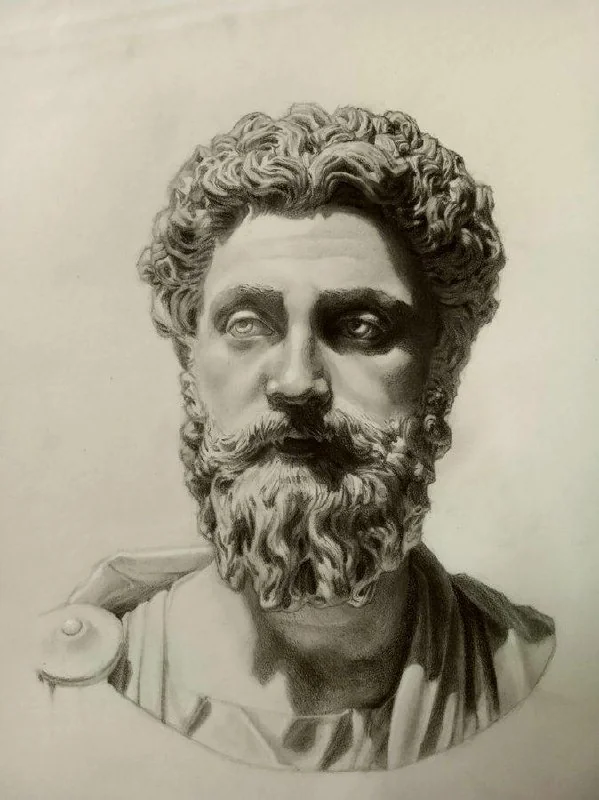
Almost everyone with the slightest interest in philosophy has heard of famous Stoics like Marcus Aurelius and Seneca, but what is Stoicism really?
The Stoics wanted to lay out what it means to live according to nature, expanding and clarifying in their own terms what Heraclitus, Socrates, and the Cynics had already begun. Their question was simple: “How do we live a virtuous, good life?”
Heraclitus gave them the metaphysical foundation: the cosmos has an order, it’s rational and alive. Socrates provided the example of living according to one’s philosophical wisdom. From the Cynics, they took the idea that virtue is the only true good, and that freedom comes from within, which the Stoics softened with reason, duty, and social responsibility.
Stoicism in one sentence is this: to live according to the wisdom that we can control only our judgements, desires, intentions, and actions, and nothing else; to perfect what is within our power, and let the rest unfold as it does naturally. Epictetus, one of the fathers of Stoicism, captured it neatly: “Some things are up to us, and some are not.” We cannot control the world, only our response to it.
In our time, Stoicism is often misunderstood. Many think it means suppressing emotion or turning away from life. But that’s a false picture. Stoicism teaches emotional discipline, not emotional indifference. It isn’t about escaping life, it’s about engaging with it rightly.
I’m not saying Stoicism is the answer to all our problems, as many modern gurus claim. But reading Seneca, Epictetus, and Aurelius can clear the mind and steady the soul.
The insight that most of our energy is wasted trying to control the uncontrollable, and that living virtuously begins where that effort ends, is truly something.