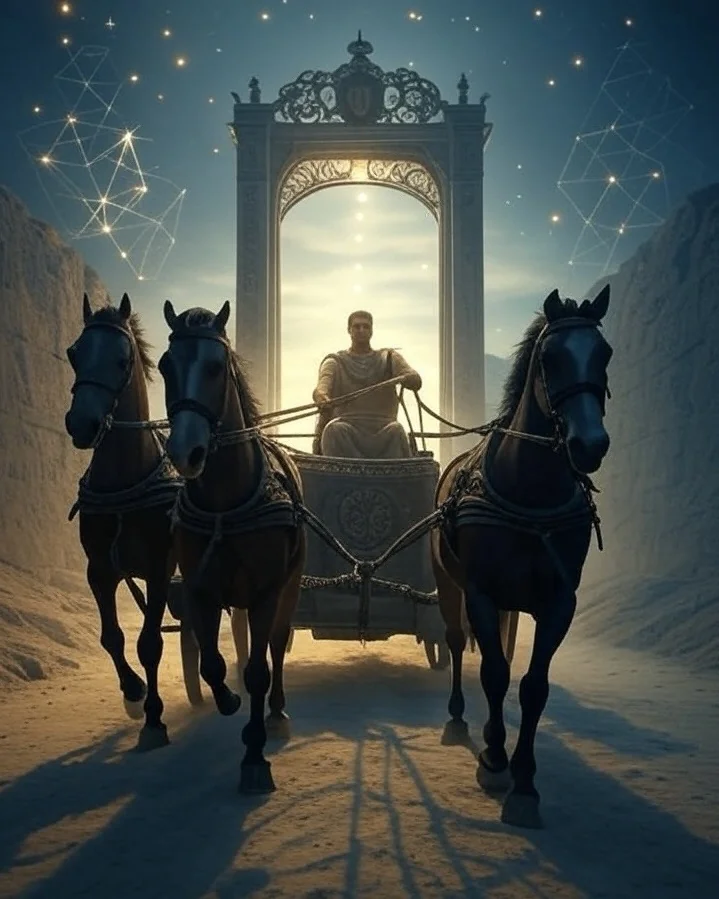
A man rides his chariot into the realm of a goddess. She tells him: humans think in a mortal, limited way. They don’t see the truth — you must look beyond. Let go of your thumos, the impulses and passions of mortal life. The gods, being immortal, see beyond such drives. Clinging to them keeps you bound to the conventions of men.
The goddess speaks of two roads: the path of aletheia (pure reason), where being simply is and cannot not-be, and the path of doxa (opinion), where mortals wander with illusions, mixing being with not-being.
What the goddess means when speaking of being and non-being, is that mortals think of things in terms of before and after, of coming-to-be and passing-away — because we live within time. From her perspective, this clouds our ability to see the nature of the world (phusis) and reach true understanding.
The philosopher Parmenides didn’t want us to believe we could live purely in truth (aletheia), nor only in opinions (doxa). To be human is to walk between these paths: part animal, part divine. Our senses (of mortal nature) deceive us, yet our reason (nous, of divine nature) touches eternity. Maybe philosophy begins here: in learning to live as mortals, but to think — at least sometimes — like gods, and understanding that we have both in our nature.